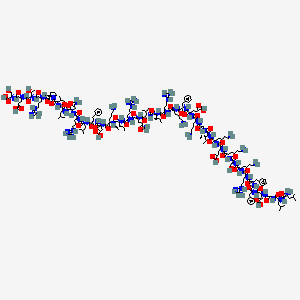
Cathelicidin antimicrobial peptide (CAMP) is a crucial component of the human innate immune system, encoded by the CAMP gene and primarily expressed as the active form LL-37. This peptide is stored in the secretory granules of neutrophils and macrophages, and is released upon activation by various pathogens such as bacteria, viruses, fungi, and parasites. Cathelicidins are amphiphilic molecules, characterized by a highly conserved cathelin domain and a variable antimicrobial peptide domain. They function by disintegrating, damaging, or puncturing the cell membranes of invading microorganisms, thereby playing a critical role in defending against bacterial infections.
The above informationis displayed for information purpose only, and has not been reviewed by EON nor does EON attests or validates the accuracy nor does it constitutes a recommendation or validation.
Sources:
https://en.wikipedia.org/wiki/Cathelicidin_antimicrobial_peptide
https://www.medchemexpress.com/ll-37-human.html
https://pubmed.ncbi.nlm.nih.gov/11389039/
https://pubmed.ncbi.nlm.nih.gov/16493063/
https://www.sciencedirect.com/science/article/pii/S000527360600126X