Pal‑GHK – (147732-56-7)
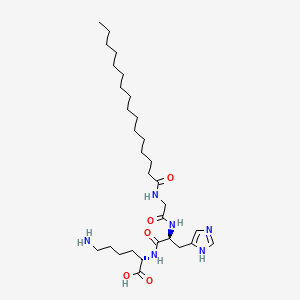
Pal-GHK, also known as Palmitoyl Tripeptide-1 or Palmitoyl Oligopeptide, is a synthetic peptide renowned for its impact on collagen production, skin health, and pigmentation. This compound combines a palmitic acid residue with a fragment of the elastin protein, specifically the amino acids glycine, histidine, and lysine, which is known as GHK. The addition of palmitoyl enhances the peptide’s lipophilicity, allowing it to penetrate the skin’s lipid barrier more effectively, thus boosting its efficacy in cosmetic and medical applications.
In animal models, Pal-GHK has demonstrated the ability to stimulate fibroblast growth and proliferation, making it a subject of interest in wound healing, skin repair, and tissue regeneration research. By mimicking damaged elastin, Pal-GHK tricks fibroblasts into regenerating this crucial skin protein, which can help counteract the effects of aging on the skin. Furthermore, studies indicate that Pal-GHK can increase collagen and elastin production, restore lip moisture and fullness, and reduce the appearance of fine lines and wrinkles. It also shows potential in mitigating redness and discoloration caused by photodamage.
The above information is displayed for information purpose only, and has not been reviewed by EON nor does EON attests or validates the accuracy nor does it constitutes a recommendation or validation.
https://www.medkoo.com/products/36116
| Other Names | Palmitoyl Tripeptide-1, Palmitoyl oligopeptide, Pal-Gly-His-Lys-OH |
|---|---|
| IUPAC Name | (2S)-6-amino-2-[[(2S)-2-[[2-(hexadecanoylamino)acetyl]amino]-3-(1H-imidazol-5-yl)propanoyl]amino]hexanoic acid |
| CAS | 147732-56-7 |
| Molecular Weight | 578.8 |
| Molecular Formula | C30H54N6O5 |
| SMILES | CCCCCCCCCCCCCCCC(=O)NCC(=O)N[C@@H](CC1=CN=CN1)C(=O)N[C@@H](CCCCN)C(=O)O |
Related products