Sarcosine – (107-97-1)
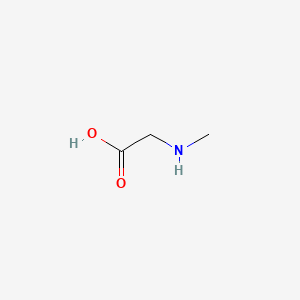
Sarcosine, also known as N-methylglycine, is a naturally occurring amino acid. It is a close relative of glycine, differing by a methyl group, and exists as a zwitterion at neutral pH. Sarcosine is ubiquitous in biological materials and is used in the manufacturing of biodegradable surfactants and toothpastes, as well as in organic synthesis.
In the realm of biochemistry, sarcosine serves as an intermediate in glycine synthesis and degradation. It is metabolized to glycine by the enzyme sarcosine dehydrogenase, while glycine-N-methyl transferase generates sarcosine from glycine. Sarcosine is also involved in one-carbon metabolism, which is crucial for processes like nucleotide synthesis and DNA methylation.
Sarcosine has garnered attention for its potential therapeutic applications. It acts as a competitive inhibitor of the glycine transporter type 1 (GlyT1), which has led to its investigation as a treatment for schizophrenia. By inhibiting GlyT1, sarcosine increases glycine concentrations, thereby enhancing NMDA receptor function. Clinical studies have shown that sarcosine can improve both positive and negative symptoms of schizophrenia.
Additionally, sarcosine has been studied as a biomarker for prostate cancer. Research indicates that it may play an active role in the progression of the disease, as adding sarcosine to prostate epithelial cells has been shown to induce a more invasive phenotype.
The above information is displayed for information purpose only, and has not been reviewed by EON nor does EON attests or validates the accuracy nor does it constitutes a recommendation or validation.
https://en.wikipedia.org/wiki/Sarcosine
| Other Names | N-methylglycine, Sarcosinic acid, 2-(methylamino)acetic acid |
|---|---|
| IUPAC Name | 2-(methylamino)acetic acid |
| CAS | 107-97-1 |
| Molecular Weight | 89.09 |
| Molecular Formula | C3H7NO2 |
| SMILES | CNCC(=O)O |
Related products