
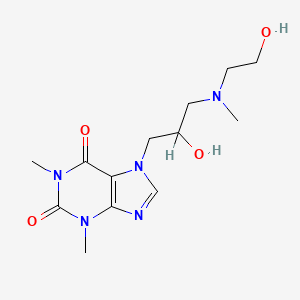
Xanthinol – (2530-97-4)
Xanthinol is a pharmaceutical compound derived from theophylline, primarily utilized as a vasodilator. It is most commonly administered in the form of xanthinol nicotinate, a salt with niacin (nicotinic acid). This drug is known for its ability to enhance blood flow and improve circulation, making it effective in treating peripheral vascular disorders such as intermittent claudication. Xanthinol nicotinate’s mechanism of action involves the synergistic effects of its components: niacin contributes to vasodilation by promoting the production of prostaglandins, while xanthinol inhibits phosphodiesterase, increasing cyclic adenosine monophosphate (cAMP) levels and relaxing smooth muscles.
Additionally, xanthinol can cross the blood-brain barrier, potentially benefiting cerebral circulation and oxygen delivery, which may aid in managing conditions like migraines and vertigo. The compound also exhibits antioxidant properties, reducing oxidative stress and protecting cells from damage. Xanthinol nicotinate is further being investigated for its potential cognitive and memory-enhancing effects, although more research is needed in this area.
The above information is displayed for information purpose only, and has not been reviewed by EON nor does EON attests or validates the accuracy nor does it constitutes a recommendation or validation.
https://en.wikipedia.org/wiki/Xanthinol
| Other Names | xantinol |
|---|---|
| IUPAC Name | 7-[2-hydroxy-3-[2-hydroxyethyl(methyl)amino]propyl]-1, 3-dimethylpurine-2, 6-dione |
| CAS | 2530-97-4 |
| Molecular Weight | 311.34 |
| Molecular Formula | C13H21N5O4 |
| SMILES | CN1C2=C(C(=O)N(C1=O)C)N(C=N2)CC(CN(C)CCO)O |
Related products


