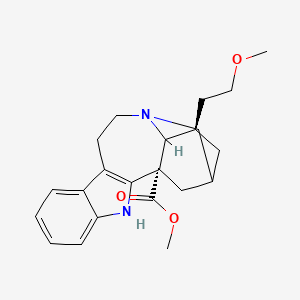
AHK-Cu – (682809-81-0)
Copper peptide GHK-Cu is a naturally occurring copper complex of the tripeptide glycyl-L-histidyl-L-lysine. It has a strong affinity for copper(II) and was first isolated from human plasma.
GHK-Cu is also found in saliva and urine. In human plasma, GHK-Cu levels decrease with age, from about 200 ng/ml at age 20 to 80 ng/ml by age 60.
GHK-Cu is known to promote wound healing, attract immune cells, and exhibit antioxidant and anti-inflammatory effects. It stimulates collagen and glycosaminoglycan synthesis in skin fibroblasts and promotes blood vessel growth.
Recent studies show that GHK-Cu can modulate gene expression, reversing it to a healthier state. Synthetic GHK-Cu is used in cosmetics for its reparative and anti-aging properties. It was first isolated by Loren Pickart in 1973 and has since been studied for its role in tissue remodeling and regenerative effects.
GHK-Cu is widely used in anti-aging cosmetics and has been shown to improve skin firmness and reduce wrinkles. It also plays a role in copper binding and cellular signaling, making it vital for various biological processes.
The above information is displayed for information purpose only, and has not been reviewed by EON nor does EON attests or validates the accuracy nor does it constitutes a recommendation or validation.
https://en.wikipedia.org/wiki/Copper_peptide_GHK-Cu
| Other Names | AHK-Cu, AHK-Cu?, EX-A7713A |
|---|---|
| IUPAC Name | copper;(2S)-6-amino-2-[[(2S)-2-[(2S)-2-azanidylpropanoyl]azanidyl-3-(1H-imidazol-4-yl)propanoyl]amino]hexanoate;hydrochloride |
| CAS | 682809-81-0 |
| Molecular Weight | 451.39 |
| Molecular Formula | C15H24ClCuN6O4- |
| SMILES | C[C@@H](C(=O)[N-][C@@H](CC1=CNC=N1)C(=O |
Related products