
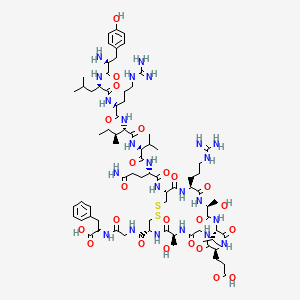
AOD-9604 (Acetate Salt) – (221231-10-3)
AOD9604 is a peptide fragment derived from the C-terminal region of human growth hormone (hGH), specifically residues 176-191, with an additional tyrosine residue at the N-terminal end for stability.
It was developed as a potential anti-obesity agent due to its lipolytic properties, which mimic the fat-reducing effects of hGH without stimulating insulin-like growth factor 1 (IGF-1) production.
Initial studies in mice and humans suggested that AOD9604 could enhance fat metabolism and reduce body weight. However, later clinical trials failed to demonstrate significant efficacy in humans, leading to the discontinuation of its development in 2007.
The peptide’s mechanism of action involves upregulation of beta-3 adrenergic receptors, which are involved in lipolysis.
The above information is displayed for information purpose only, and has not been reviewed by EON nor does EON attests or validates the accuracy nor does it constitutes a recommendation or validation.
https://en.wikipedia.org/wiki/AOD9604
| CAS | AOD 9604, UNII-7UP768IP4M, AOD-9604, 7UP768IP4M |
|---|---|
| Molecular Weight | (2S)-2-[[2-[[(4R, 7S, 13S, 16S, 19S, 22S, 25R)-25-[[(2S)-5-amino-2-[[(2S)-2-[[(2S, 3S)-2-[[(2S)-2-[[(2S)-2-[[(2S)-2-amino-3-(4-hydroxyphenyl)propanoyl]amino]-4-methylpentanoyl]amino]-5-carbamimidamidopentanoyl]amino]-3-methylpentanoyl]amino]-3-methylbutanoyl]amino]-5-oxopentanoyl]amino]-22-(3-carbamimidamidopropyl)-13-(2-carboxyethyl)-7, 19-bis(hydroxymethyl)-6, 9, 12, 15, 18, 21, 24-heptaoxo-16-propan-2-yl-1, 2-dithia-5, 8, 11, 14, 17, 20, 23-heptazacyclohexacosane-4-carbonyl]amino]acetyl]amino]-3-phenylpropanoic acid |
| Molecular Formula | 221231-10-3 |
Related products


