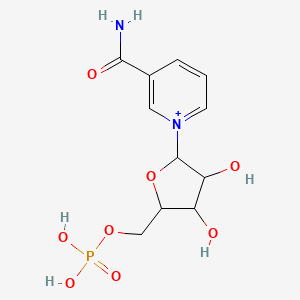
Beta-Nicotinamide Mononucleotide (NMN) – (1094-61-7)
Nicotinamide mononucleotide (NMN) is a nucleotide derived from ribose, nicotinamide, nicotinamide riboside, and niacin.
It serves as a precursor for nicotinamide adenine dinucleotide (NAD+), a coenzyme essential for cellular energy production and various biochemical processes. NMN has been studied for its potential anti-aging, neuroprotective, and metabolic benefits, particularly in animal models.
Research suggests that NMN supplementation can increase NAD+ levels, improve mitochondrial function, and mitigate age-related disorders such as oxidative stress, DNA damage, and inflammation. However, human studies are limited, and the efficacy and safety of NMN as a dietary supplement remain under investigation.
NMN is found naturally in foods like edamame, broccoli, and avocado, but in concentrations too low to achieve therapeutic doses.
The above information is displayed for information purpose only, and has not been reviewed by EON nor does EON attests or validates the accuracy nor does it constitutes a recommendation or validation.
https://en.wikipedia.org/wiki/Nicotinamide_mononucleotide
| Other Names | beta-Nicotinamide mononucleotide, nicotinamide mononucleotide, NMN zwitterion, beta-NMN |
|---|---|
| IUPAC Name | [(2R, 3S, 4R, 5R)-5-(3-carbamoylpyridin-1-ium-1-yl)-3, 4-dihydroxyoxolan-2-yl]methyl hydrogen phosphate |
| CAS | 1094-61-7 |
| Molecular Weight | 334.22 |
| Molecular Formula | C11H15N2O8P |
| SMILES | C1=CC(=C[N+](=C1)[C@H]2[C@@H]([C@@H]([C@H](O2)COP(=O)(O)[O-])O)O)C(=O)N |
Related products