DHEA – (53-43-0)
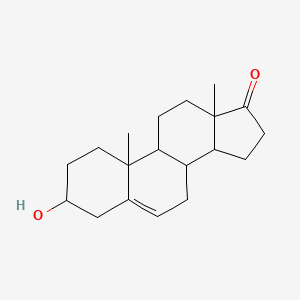
Dehydroepiandrosterone (DHEA) is an endogenous steroid hormone precursor and one of the most abundant circulating steroids in humans.
It is produced in the adrenal glands, gonads, and brain. DHEA serves as a metabolic intermediate in the biosynthesis of androgen and estrogen sex steroids in various tissues. It also acts as a neurosteroid, modulating neurotrophic factor receptors and binding to nuclear and cell surface receptors.
DHEA levels peak around age 20 and decline with age, potentially influencing age-related conditions. It is also studied for its effects on neurotransmitter receptors and neurotrophin receptors, with implications for neurodegenerative diseases.
The above information is displayed for information purpose only, and has not been reviewed by EON nor does EON attests or validates the accuracy nor does it constitutes a recommendation or validation.
https://en.wikipedia.org/wiki/Dehydroepiandrosterone
| Other Names | Dehydroepiandrosterone, PRASTERONE, Dehydroisoandrosterone |
|---|---|
| IUPAC Name | (3S, 8R, 9S, 10R, 13S, 14S)-3-hydroxy-10, 13-dimethyl-1, 2, 3, 4, 7, 8, 9, 11, 12, 14, 15, 16-dodecahydrocyclopenta[a]phenanthren-17-one |
| CAS | 53-43-0 |
| Molecular Weight | 288.4 |
| Molecular Formula | C19H28O2 |
| SMILES | C[C@]12CC[C@H]3[C@H]([C@@H]1CCC2=O)CC=C4[C@@]3(CC[C@@H](C4)O)C |
Related products