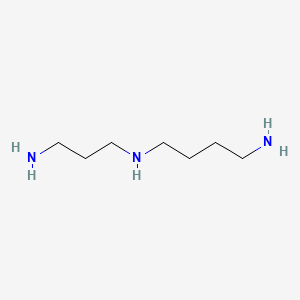
Spermidine trihydrochloride – (334-50-9)
Spermidine trihydrochloride is a polyamine compound, widely recognized for its role in various biological processes. It is a hydrochloride salt of spermidine, which is naturally found in ribosomes and living tissues. This compound is known for its ability to maintain cell membrane stability, enhance antioxidant enzyme activities, and improve the function of photosystem II (PSII) in plants. Spermidine trihydrochloride significantly decreases the levels of hydrogen peroxide (H2O2) and superoxide (O2-), making it an effective agent against oxidative stress.
In the context of research, spermidine trihydrochloride is used to study its effects on vascular calcification in chronic kidney disease, where it modulates the SIRT1 signaling pathway. It is also utilized in in vitro transcription and translation processes due to its ability to stabilize DNA and enhance the specificity of PCR reactions. Additionally, spermidine trihydrochloride has been investigated for its potential in promoting longevity and reducing aging in various organisms, including mice, yeast, flies, and human immune cells, primarily through the induction of autophagy.
The above information is displayed for information purpose only, and has not been reviewed by EON nor does EON attests or validates the accuracy nor does it constitutes a recommendation or validation.
https://en.wikipedia.org/wiki/Spermidine
| Other Names | Spermidine 3HCl |
|---|---|
| IUPAC Name | N'-(3-aminopropyl)butane-1, 4-diamine;trihydrochloride |
| CAS | 334-50-9 |
| Molecular Weight | 254.6 |
| Molecular Formula | C7H22Cl3N3 |
| SMILES | C(CCNCCCN)CN.Cl.Cl.Cl |
Related products