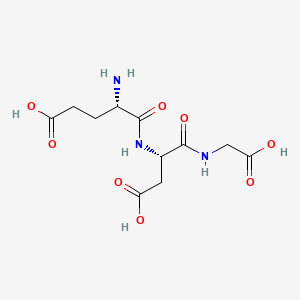
Testagen – (75007-24-8)

Testagen peptide, a subject of burgeoning interest in scientific research, is being explored for its potential roles in cellular and molecular mechanisms, particularly in the context of cellular senescence, tissue repair, and homeostasis. This peptide, with its unique molecular composition, is speculated to interact with critical pathways such as p53, p21, and p16, which are key regulators of the senescence process. Researchers hypothesize that Testagen may modulate protein-protein interactions or influence post-translational modifications that govern senescence-related signaling, potentially delaying the onset of cellular aging or mitigating its effects on tissue integrity.

Oxidative stress, a major contributor to cellular senescence, is another area where Testagen shows promise. Studies suggest that the peptide might modulate the activity of antioxidant enzymes like superoxide dismutase (SOD) and catalase, supporting the body’s intrinsic antioxidant defense systems and reducing oxidative damage. This could hypothetically slow down cellular aging and enhance tissue resilience.

In the realm of tissue repair and regeneration, Testagen is believed to influence the activity of growth factors and cytokines, such as transforming growth factor-beta (TGF-β) and vascular endothelial growth factor (VEGF), which are crucial for wound healing and angiogenesis. Additionally, the peptide may support the recruitment and activation of stem cells, essential for tissue regeneration. This property could make Testagen a valuable tool for studying age-related tissue degeneration and the loss of regenerative capacity.

Testagen’s potential neuroprotective properties are also under investigation. Researchers speculate that the peptide might modulate neuronal signaling pathways, influencing neurogenesis, particularly in the hippocampus, a region critical for memory and learning. By interacting with neurotrophic factors like brain-derived neurotrophic factor (BDNF) and nerve growth factor (NGF), Testagen could theoretically stimulate the formation of new neurons, potentially mitigating cognitive decline.

Furthermore, the peptide’s immunomodulatory properties are being explored for their ability to regulate the inflammatory environment associated with cellular aging and senescence. By altering the production of pro-inflammatory or anti-inflammatory cytokines, Testagen could help manage chronic inflammation, a known contributor to age-related diseases.

The above information is displayed for information purpose only, and has not been reviewed by EON nor does EON attests or validates the accuracy nor does it constitutes a recommendation or validation.

Testagen peptide, a subject of burgeoning interest in scientific research, is being explored for its potential roles in cellular and molecular mechanisms, particularly in the context of cellular senescence, tissue repair, and homeostasis. This peptide, with its unique molecular composition, is speculated to interact with critical pathways such as p53, p21, and p16, which are key regulators of the senescence process. Researchers hypothesize that Testagen may modulate protein-protein interactions or influence post-translational modifications that govern senescence-related signaling, potentially delaying the onset of cellular aging or mitigating its effects on tissue integrity.

Oxidative stress, a major contributor to cellular senescence, is another area where Testagen shows promise. Studies suggest that the peptide might modulate the activity of antioxidant enzymes like superoxide dismutase (SOD) and catalase, supporting the body’s intrinsic antioxidant defense systems and reducing oxidative damage. This could hypothetically slow down cellular aging and enhance tissue resilience.

In the realm of tissue repair and regeneration, Testagen is believed to influence the activity of growth factors and cytokines, such as transforming growth factor-beta (TGF-β) and vascular endothelial growth factor (VEGF), which are crucial for wound healing and angiogenesis. Additionally, the peptide may support the recruitment and activation of stem cells, essential for tissue regeneration. This property could make Testagen a valuable tool for studying age-related tissue degeneration and the loss of regenerative capacity.

Testagen’s potential neuroprotective properties are also under investigation. Researchers speculate that the peptide might modulate neuronal signaling pathways, influencing neurogenesis, particularly in the hippocampus, a region critical for memory and learning. By interacting with neurotrophic factors like brain-derived neurotrophic factor (BDNF) and nerve growth factor (NGF), Testagen could theoretically stimulate the formation of new neurons, potentially mitigating cognitive decline.

Furthermore, the peptide’s immunomodulatory properties are being explored for their ability to regulate the inflammatory environment associated with cellular aging and senescence. By altering the production of pro-inflammatory or anti-inflammatory cytokines, Testagen could help manage chronic inflammation, a known contributor to age-related diseases.

The above information is displayed for information purpose only, and has not been reviewed by EON nor does EON attests or validates the accuracy nor does it constitutes a recommendation or validation.
Sources:
https://pubchem.ncbi.nlm.nih.gov/compound/194641

Testagen Peptide: Studies in Stress, Cognition, and More


https://www.nation.com.pk/23-Oct-2024/testagen-peptide-a-speculative-look-into-cellular-senescence

Other Names

Glutamyl-aspartyl-glycine, Glu-asp-gly, H-Glu-asp-gly-OH, T-34 tripeptide

IUPAC Name

(4S)-4-amino-5-[[(2S)-3-carboxy-1-(carboxymethylamino)-1-oxopropan-2-yl]amino]-5-oxopentanoic acid

CAS

75007-24-8

Molecular Weight

319.27

Molecular Formula

C11H17N3O8

SMILES

C(CC(=O)O)[C@@H](C(=O)N[C@@H](CC(=O)O)C(=O)NCC(=O)O)N

No products in the cart.