TUDCA – (14605-22-2)
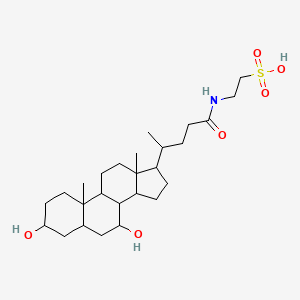
Ursodoxicoltaurine, also known as Tauroursodeoxycholic acid (TUDCA), is a hydrophilic bile acid and the taurine conjugate of ursodeoxycholic acid (UDCA). It is naturally found in bear bile and has been chemically synthesized for medical use. Ursodoxicoltaurine is primarily used in the treatment of cholestatic liver diseases and has been investigated for its potential in managing amyotrophic lateral sclerosis (ALS).
The compound exhibits anti-apoptotic properties by inhibiting the mitochondrial pathway of cell death, reducing oxidative stress, and alleviating endoplasmic reticulum stress. Recent studies have highlighted its neuroprotective effects, particularly in retinal degenerative disorders such as retinitis pigmentosa, where it preserves photoreceptor structure and function. Additionally, ursodoxicoltaurine has shown promise in suppressing choroidal neovascularization and maintaining synaptic connectivity in the retina.
Despite its potential benefits, the drug faced setbacks with the failure of clinical trials for ALS, leading to its market withdrawal in some regions. Ongoing research continues to explore its applications in various neurodegenerative and ocular diseases.
The above information is displayed for information purpose only, and has not been reviewed by EON nor does EON attests or validates the accuracy nor does it constitutes a recommendation or validation.
https://en.wikipedia.org/wiki/Ursodoxicoltaurine
| Other Names | Tauroursodeoxycholic acid, Tauroursodeoxycholate, Ursodeoxycholyltaurine |
|---|---|
| IUPAC Name | 2-[[(4R)-4-[(3R, 5S, 7S, 8R, 9S, 10S, 13R, 14S, 17R)-3, 7-dihydroxy-10, 13-dimethyl-2, 3, 4, 5, 6, 7, 8, 9, 11, 12, 14, 15, 16, 17-tetradecahydro-1H-cyclopenta[a]phenanthren-17-yl]pentanoyl]amino]ethanesulfonic acid |
| CAS | 14605-22-2 |
| Molecular Weight | 499.7 |
| Molecular Formula | C26H45NO6S |
| SMILES | C[C@H](CCC(=O)NCCS(=O)(=O)O)[C@H]1CC[C@@H]2[C@@]1(CC[C@H]3[C@H]2[C@H](C[C@H]4[C@@]3(CC[C@H](C4)O)C)O)C |
Related products