D-Cycloserine – (68-41-7)
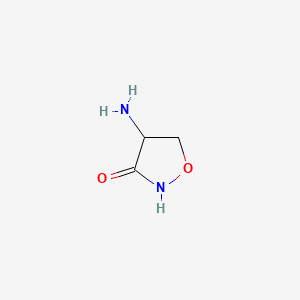
Cycloserine is a broad-spectrum antibiotic and GABA transaminase inhibitor used primarily to treat tuberculosis, particularly in cases of drug-resistant strains. It is administered orally and works by inhibiting bacterial cell wall synthesis, specifically targeting enzymes involved in peptidoglycan formation.
Discovered in 1954 from Streptomyces species, it is listed on the World Health Organization’s List of Essential Medicines. Cycloserine is structurally similar to D-alanine and interferes with bacterial cell wall synthesis by inhibiting alanine racemase and D-alanine ligase. Cycloserine has also been explored for potential psychiatric applications, though evidence remains inconclusive.
The above information is displayed for information purpose only, and has not been reviewed by EON nor does EON attests or validates the accuracy nor does it constitutes a recommendation or validation.
https://en.wikipedia.org/wiki/Cycloserine
| Other Names | cycloserine, Seromycin, orientomycin |
|---|---|
| IUPAC Name | (4R)-4-amino-1, 2-oxazolidin-3-one |
| CAS | 68-41-7 |
| Molecular Weight | 102.09 |
| Molecular Formula | C3H6N2O2 |
| SMILES | C1[C@H](C(=O)NO1)N |
Related products