
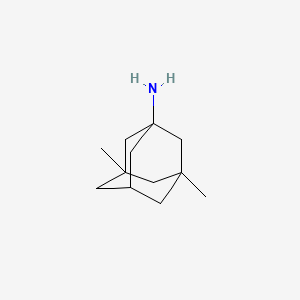
Memantine HCL – (41100-52-1)
Memantine is a molecule used to treat moderate-to-severe Alzheimer’s disease. It works by blocking NMDA receptors, which helps regulate glutamate activity in the brain, preventing excessive calcium influx and neuronal damage.
Common side effects include headache, constipation, sleepiness, and dizziness. Severe side effects may include blood clots, psychosis, and heart failure.
It was first discovered in 1963. It has shown modest improvements in cognition, mood, behavior, and daily activities in Alzheimer’s patients but is not effective for mild disease. It is also studied for other conditions like Parkinson’s disease, depression, and long COVID.
The above information is displayed for information purpose only, and has not been reviewed by EON nor does EON attests or validates the accuracy nor does it constitutes a recommendation or validation.
https://en.wikipedia.org/wiki/Memantine
| Other Names | MEMANTINE HYDROCHLORIDE, Namenda |
|---|---|
| IUPAC Name | 3, 5-dimethyladamantan-1-amine;hydrochloride |
| CAS | 41100-52-1 |
| Molecular Weight | 215.76 |
| Molecular Formula | C12H22ClN |
| SMILES | CC12CC3CC(C1)(CC(C3)(C2)N)C.Cl |
Related products


