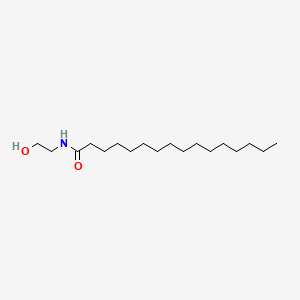
Palmitoylethanolamide – (544-31-0)
Palmitoylethanolamide (PEA) is an endogenous fatty acid amide and lipid modulator with anti-inflammatory, analgesic, antimicrobial, immunomodulatory, and neuroprotective properties.
It primarily targets peroxisome proliferator-activated receptor alpha (PPAR-α) and has affinity for cannabinoid-like G-coupled receptors GPR55 and GPR119. PEA does not bind to cannabinoid receptors CB1 and CB2, distinguishing it from classic endocannabinoids.
It has been studied for its role in reducing pain, inflammation, and neuropathic conditions, with clinical applications in chronic pain, neuropathic pain, and inflammatory disorders.
It has shown promise in animal models and human trials for conditions like multiple sclerosis, neuropathic pain, and glaucoma. PEA’s mechanism involves downregulating mast cell activation, reducing inflammatory mediators, and modulating pain sensitivity.
The above information is displayed for information purpose only, and has not been reviewed by EON nor does EON attests or validates the accuracy nor does it constitutes a recommendation or validation.
https://en.wikipedia.org/wiki/Palmitoylethanolamide
| Other Names | Palmidrol, Palmitoyl ethanolamide |
|---|---|
| IUPAC Name | N-(2-hydroxyethyl)hexadecanamide |
| CAS | 544-31-0 |
| Molecular Weight | 299.5 |
| Molecular Formula | C18H37NO2 |
| SMILES | CCCCCCCCCCCCCCCC(=O)NCCO |
Related products