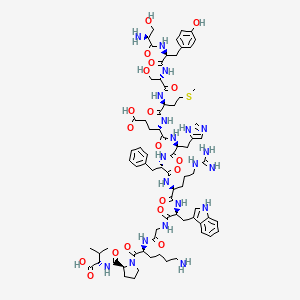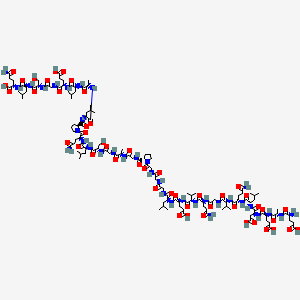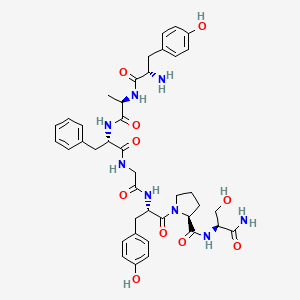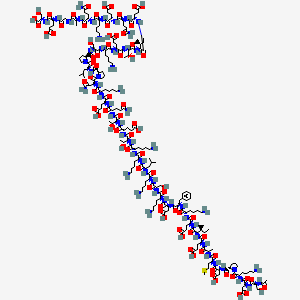
TB-500 – (77591-33-4)
Thymosin beta-4 (TB4) is a naturally occurring, highly conserved 43-amino acid peptide. It is encoded by the TMSB4X gene and is abundant in various tissues, particularly in the spleen, lungs, thymus, brain, and heart. TB4 plays a crucial role in actin sequestration, influencing cell proliferation, migration, and differentiation. Its actin-binding properties make it a key regulator of cytoskeletal dynamics, essential for maintaining cell shape and facilitating movement.
TB4’s biological activities extend beyond actin binding. It exhibits “moonlighting” functions, interacting with multiple proteins and potentially acting as a signaling molecule. This versatility suggests a role in tissue regeneration and repair. Studies have shown that TB4 promotes cell migration, angiogenesis, and the survival of various cell types, making it a promising candidate for therapeutic applications in wound healing and tissue regeneration.
In the context of cardiac health, TB4 has demonstrated significant potential. It enhances cardiomyocyte survival and improves cardiac function following injury. Research indicates that TB4 can reactivate the embryonic gene program in the adult heart, particularly in the epicardium, a layer with regenerative capabilities. This reactivation leads to the proliferation and mobilization of epicardium-derived cells (EPDCs), which can differentiate into cardiovascular and lymphatic cell lineages, thereby supporting heart repair.
Moreover, TB4 exhibits anti-inflammatory properties. It inhibits neutrophil chemotaxis and reduces inflammation by modulating immune responses. This anti-inflammatory action further contributes to its therapeutic potential in treating conditions characterized by inflammation and tissue damage.
Despite its promise, the clinical application of TB4 faces challenges. Its large size and complex structure pose difficulties for systemic administration. However, ongoing research aims to overcome these hurdles through innovative delivery methods and the development of synthetic analogs.
The above information is displayed for information purpose only, and has not been reviewed by EON nor does EON attests or validates the accuracy nor does it constitutes a recommendation or validation.
https://en.wikipedia.org/wiki/Thymosin_beta-4
| Other Names | Timbetasin, Thymosin beta4 |
|---|---|
| IUPAC Name | (4S)-4-[[2-[[(2S)-2-[[(2S)-2-[[(2S)-2-[[(2S)-2-[[(2S)-2-[[(2S)-2-[[(2S, 3S)-2-[[(2S, 3R)-2-[[(2S)-2-[[(2S)-2-[[(2S)-2-[[(2S)-1-[(2S)-2-[[(2S)-1-[(2S)-2-[[(2S)-2-[[(2S)-2-[[(2S)-2-[[(2S, 3R)-2-[[(2S)-2-[[(2S, 3R)-2-[[(2S)-2-[[(2S)-2-[[(2S)-2-[[(2S)-2-[[(2S)-2-[[(2S)-2-[[(2S)-2-[[(2S)-2-[[(2S)-2-[[(2S)-2-[[(2S, 3S)-2-[[(2S)-2-[[(2S)-2-[[(2S)-2-[[(2S)-2-[[(2S)-1-[(2S)-2-[[(2S)-2-[[(2S)-2-acetamido-3-hydroxypropanoyl]amino]-3-carboxypropanoyl]amino]-6-aminohexanoyl]pyrrolidine-2-carbonyl]amino]-3-carboxypropanoyl]amino]-4-methylsulfanylbutanoyl]amino]propanoyl]amino]-4-carboxybutanoyl]amino]-3-methylpentanoyl]amino]-4-carboxybutanoyl]amino]-6-aminohexanoyl]amino]-3-phenylpropanoyl]amino]-3-carboxypropanoyl]amino]-6-aminohexanoyl]amino]-3-hydroxypropanoyl]amino]-6-aminohexanoyl]amino]-4-methylpentanoyl]amino]-6-aminohexanoyl]amino]-6-aminohexanoyl]amino]-3-hydroxybutanoyl]amino]-4-carboxybutanoyl]amino]-3-hydroxybutanoyl]amino]-5-amino-5-oxopentanoyl]amino]-4-carboxybutanoyl]amino]-6-aminohexanoyl]amino]-4-amino-4-oxobutanoyl]pyrrolidine-2-carbonyl]amino]-4-methylpentanoyl]pyrrolidine-2-carbonyl]amino]-3-hydroxypropanoyl]amino]-6-aminohexanoyl]amino]-4-carboxybutanoyl]amino]-3-hydroxybutanoyl]amino]-3-methylpentanoyl]amino]-4-carboxybutanoyl]amino]-5-amino-5-oxopentanoyl]amino]-4-carboxybutanoyl]amino]-6-aminohexanoyl]amino]-5-amino-5-oxopentanoyl]amino]propanoyl]amino]acetyl]amino]-5-[[(1S)-1-carboxy-2-hydroxyethyl]amino]-5-oxopentanoic acid |
| CAS | 77591-33-4 |
| Molecular Weight | 4963 |
| Molecular Formula | C212H350N56O78S |
| SMILES | CC[C@H](C)[C@@H](C(=O)N[C@@H](CCC(=O)O)C(=O)N[C@@H](CCCCN)C(=O)N[C@@H](CC1=CC=CC=C1)C(=O)N[C@@H](CC(=O)O)C(=O)N[C@@H](CCCCN)C(=O)N[C@@H](CO)C(=O)N[C@@H](CCCCN)C(=O)N[C@@H](CC(C)C)C(=O)N[C@@H](CCCCN)C(=O)N[C@@H](CCCCN)C(=O)N[C@@H]([C@@H](C)O)C(=O)N[C@@H](CCC(=O)O)C(=O)N[C@@H]([C@@H](C)O)C(=O)N[C@@H](CCC(=O)N)C(=O)N[C@@H](CCC(=O)O)C(=O)N[C@@H](CCCCN)C(=O)N[C@@H](CC(=O)N)C(=O)N2CCC[C@H]2C(=O)N[C@@H](CC(C)C)C(=O)N3CCC[C@H]3C(=O)N[C@@H](CO)C(=O)N[C@@H](CCCCN)C(=O)N[C@@H](CCC(=O)O)C(=O)N[C@@H]([C@@H](C)O)C(=O)N[C@@H]([C@@H](C)CC)C(=O)N[C@@H](CCC(=O)O)C(=O)N[C@@H](CCC(=O)N)C(=O)N[C@@H](CCC(=O)O)C(=O)N[C@@H](CCCCN)C(=O)N[C@@H](CCC(=O)N)C(=O)N[C@@H](C)C(=O)NCC(=O)N[C@@H](CCC(=O)O)C(=O)N[C@@H](CO)C(=O)O)NC(=O)[C@H](CCC(=O)O)NC(=O)[C@H](C)NC(=O)[C@H](CCSC)NC(=O)[C@H](CC(=O)O)NC(=O)[C@@H]4CCCN4C(=O)[C@H](CCCCN)NC(=O)[C@H](CC(=O)O)NC(=O)[C@H](CO)NC(=O)C |
Related products