Theacrine – (2309-49-1)
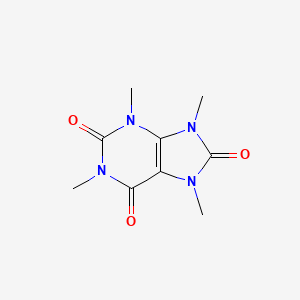
Theacrine is a purine alkaloid found in the Chinese tea known as kucha (Camellia assamica var. Kucha) and in the Cupuaçu fruit (Theobroma grandiflorum). Structurally similar to caffeine, theacrine is believed to act as an adenosine antagonist, potentially influencing dopamine receptors and exhibiting anti-inflammatory and analgesic properties. With a half-life of 30 to 33 hours, theacrine demonstrates clinical safety and non-habituating effects in humans, even at doses up to 300 mg/day over eight weeks. Unlike caffeine, theacrine does not appear to cause tachyphylaxis, making it an attractive alternative for those seeking cognitive and physical performance benefits without the risk of dependency.
The above information is displayed for information purpose only, and has not been reviewed by EON nor does EON attests or validates the accuracy nor does it constitutes a recommendation or validation.
https://en.wikipedia.org/wiki/Theacrine
| Other Names | Tetramethyluric acid, Temurin |
|---|---|
| IUPAC Name | 1, 3, 7, 9-tetramethylpurine-2, 6, 8-trione |
| CAS | 2309-49-1 |
| Molecular Weight | 224.22 |
| Molecular Formula | C9H12N4O3 |
| SMILES | CN1C2=C(N(C1=O)C)N(C(=O)N(C2=O)C)C |
Related products