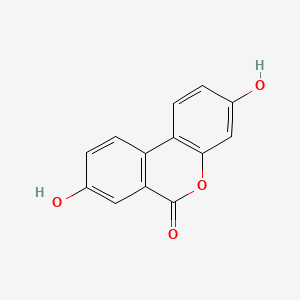
Urolithin A – (1143-70-0)
Urolithin A is a metabolite produced by gut bacteria from ellagitannins found in foods like pomegranates, walnuts, and berries. It belongs to the class of organic compounds known as benzo-coumarins or dibenzo-α-pyrones. Urolithin A is not directly present in food but forms through the transformation of ellagic acids and ellagitannins by the gut microbiota.
Urolithin A has been studied for its potential health benefits, particularly in muscle health and performance. It exhibits anti-inflammatory, antioxidant, and anti-tumor properties. In muscle health, Urolithin A promotes muscle protein synthesis and growth, enhances mitochondrial function, and regulates autophagy, which may help mitigate muscle atrophy and improve muscle endurance and strength.
Research indicates that Urolithin A activates the AMPK pathway, which increases mitochondrial biogenesis and enhances fatty acid oxidation and glycogen synthesis, improving muscle energy supply and metabolism. It also inhibits the mTOR pathway, regulating muscle protein synthesis and cell growth. Additionally, Urolithin A suppresses the NF-κB pathway, reducing inflammatory responses and promoting muscle recovery.
The above information is displayed for information purpose only, and has not been reviewed by EON nor does EON attests or validates the accuracy nor does it constitutes a recommendation or validation.
https://en.wikipedia.org/wiki/Urolithin_A
| Other Names | 3, 8-Dihydroxyurolithin |
|---|---|
| IUPAC Name | 3, 8-dihydroxybenzo[c]chromen-6-one |
| CAS | 1143-70-0 |
| Molecular Weight | 228.2 |
| Molecular Formula | C13H8O4 |
| SMILES | C1=CC2=C(C=C1O)C(=O)OC3=C2C=CC(=C3)O |
Related products