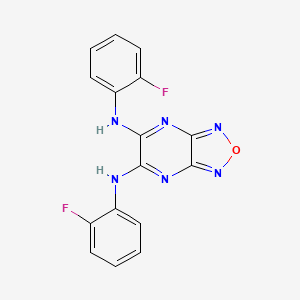
BAM15 – (210302-17-3)
BAM15 is a novel mitochondrial protonophore uncoupler that has demonstrated significant potential in treating a variety of diseases, particularly those related to mitochondrial dysfunction. As a selective mitochondrial uncoupler, BAM15 enhances mitochondrial respiration and metabolic flexibility by disrupting the coupling between electron transport and ATP synthesis, thereby dissipating the proton gradient across the inner mitochondrial membrane. This process leads to increased mitochondrial respiration and energy expenditure, offering therapeutic benefits in diverse disease contexts.
In the context of obesity, BAM15 has shown promise by increasing energy expenditure and reducing fat accumulation without altering food intake or body temperature. It achieves this by enhancing the expression of mitochondrial fusion proteins, promoting mitochondrial network contacts, and improving mitochondrial autophagy. Additionally, BAM15 reduces the expression of adipogenesis-regulating genes, leading to decreased fat accumulation.
BAM15 also exhibits potential in treating diabetes by improving glycemic control and reversing insulin resistance. It effectively lowers blood glucose levels and reduces glucagon secretion, thereby alleviating hyperglycemia while preserving pancreatic alpha cell mass. In non-alcoholic fatty liver disease (NAFLD), BAM15 alleviates oxidative stress and mitochondrial dysfunction, reducing liver and serum triglyceride concentrations and mitigating hepatic steatosis.
Furthermore, BAM15 shows promise in treating sepsis by reducing mitochondrial DNA (mtDNA) release and mitigating kidney damage. It disrupts the positive feedback loop of mtDNA release and mtROS production, thereby mitigating tissue damage. In cardiovascular diseases, BAM15 targets the NLRP3 inflammasome activation pathway, suppressing the translocation of NF-κB into the nucleus and inhibiting the expression of NLRP3 and IL-1β.
The above information is displayed for information purpose only, and has not been reviewed by EON nor does EON attests or validates the accuracy nor does it constitutes a recommendation or validation.
https://en.wikipedia.org/wiki/BAM15
| IUPAC Name | 5-N, 6-N-bis(2-fluorophenyl)-[1, 2, 5]oxadiazolo[3, 4-b]pyrazine-5, 6-diamine |
|---|---|
| CAS | 210302-17-3 |
| Molecular Weight | 340.29 |
| Molecular Formula | C16H10F2N6O |
| SMILES | C1=CC=C(C(=C1)NC2=NC3=NON=C3N=C2NC4=CC=CC=C4F)F |
Related products