Bromantane – (87913-26-6)
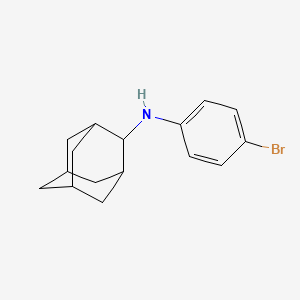
Bromantane, sold under the brand name Ladasten, is an atypical central nervous system (CNS) stimulant and anxiolytic drug of the adamantane family, related to amantadine and memantine. It is approved in Russia for the treatment of neurasthenia.
Bromantane’s effects are dependent on the dopaminergic and possibly serotonergic neurotransmitter systems, though its exact mechanism of action is unknown. It is distinct from typical stimulants like amphetamine and has been described as an actoprotector (synthetic adaptogen).
Clinically, bromantane has been shown to improve physical and mental performance, with therapeutic effects observed within 1–3 days. It is well-tolerated, with minimal side effects, and has been noted to normalize the sleep-wake cycle.
Bromantane also exhibits anti-inflammatory and antidepressant-like properties in animal models. Its pharmacological activity involves the upregulation of dopamine synthesis enzymes, such as tyrosine hydroxylase and aromatic L-amino acid decarboxylase, leading to increased dopamine levels in the brain.
Bromantane is not associated with addiction potential or withdrawal symptoms and is considered safe for long-term use.
The above information is displayed for information purpose only, and has not been reviewed by EON nor does EON attests or validates the accuracy nor does it constitutes a recommendation or validation.
https://en.wikipedia.org/wiki/Bromantane
| Other Names | Bromantane, Bromantan, Ladasten, N-(4-bromophenyl)adamantan-2-amine |
|---|---|
| IUPAC Name | N-(4-bromophenyl)adamantan-2-amine |
| CAS | 87913-26-6 |
| Molecular Weight | 306.24 |
| Molecular Formula | C16H20BrN |
| SMILES | C1C2CC3CC1CC(C2)C3NC4=CC=C(C=C4)Br |
Related products