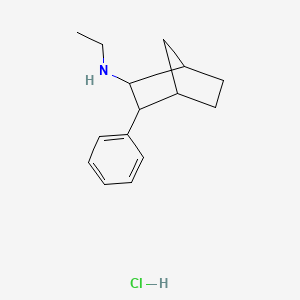
Fencamfamin Hydrochloride – (2240-14-4)
Fencamfamin, also known as fencamfamine is a stimulant developed by Merck in the 1960s. It is used, though rarely, for treating depressive daytime fatigue, lack of concentration, and lethargy, particularly in individuals with chronic medical conditions due to its favorable safety profile.
Fencamfamin is well tolerated, with minimal circulatory effects, though extended use may cause dryness of the mouth. It is contraindicated in individuals with heart diseases, angina pectoris, decompensated cardiac insufficiency, glaucoma, hyper-excitability, thyrotoxicosis, or those treated with monoamine oxidase inhibitors.
Fencamfamin acts as an indirect dopamine agonist, releasing dopamine similarly to amphetamines but is ten times less potent than dexamphetamine.
Its main mechanism of action is the inhibition of dopamine reuptake. It does not inhibit monoamine oxidase enzymes.
The above information is displayed for information purpose only, and has not been reviewed by EON nor does EON attests or validates the accuracy nor does it constitutes a recommendation or validation.
https://en.wikipedia.org/wiki/Fencamfamin
| Other Names | Fencamfamine hydrochloride, Glucoenergan, Fencamfamin HCl |
|---|---|
| IUPAC Name | N-ethyl-3-phenylbicyclo[2.2.1]heptan-2-amine;hydrochloride |
| CAS | 2240-14-4 |
| Molecular Weight | 251.79 |
| Molecular Formula | C15H22ClN |
| SMILES | CCNC1C2CCC(C2)C1C3=CC=CC=C3.Cl |
Related products