Halostachine – (6589-55-5)
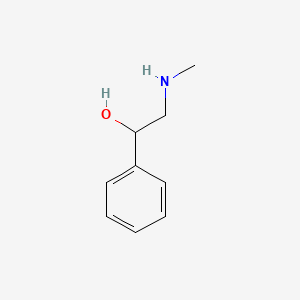
Halostachine, also known as N-methylphenylethanolamine, is a naturally occurring alkaloid first isolated from the Asian shrub *Halostachys caspica*. It is a β-hydroxy-phenethylamine, structurally related to phenylethanolamine, synephrine, and ephedrine.
Halostachine exhibits pharmacological properties similar to these compounds, including pressor activity and adrenergic effects, though it has not been developed as a prescription drug. It is commonly available as a synthetic racemate and appears as a colorless solid.
Halostachine has been found in plants like Halostachys caspica, perennial ryegrass (Lolium perenne), and tall fescue (Festuca arundinacea). Its pharmacological effects include mydriasis, blood pressure elevation, and adrenergic receptor activity, though its potency is lower than that of epinephrine.
The above information is displayed for information purpose only, and has not been reviewed by EON nor does EON attests or validates the accuracy nor does it constitutes a recommendation or validation.
https://en.wikipedia.org/wiki/Halostachine
| Other Names | 2-(Methylamino)-1-phenylethanol, N-methylphenylethanolamine, 2-(methylamino)-1-phenylethan-1-ol |
|---|---|
| IUPAC Name | 2-(methylamino)-1-phenylethanol |
| CAS | 6589-55-5 |
| Molecular Weight | 151.21 |
| Molecular Formula | C9H13NO |
| SMILES | CNCC(C1=CC=CC=C1)O |
Related products