
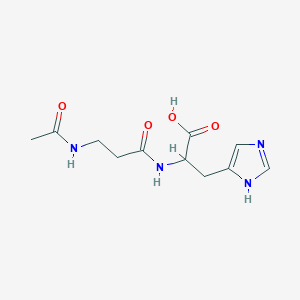
N-acetyl-L-Carnosine – (56353-15-2)
N-Acetylcarnosine (NAC) is a naturally occurring compound chemically related to the dipeptide carnosine. Its molecular structure is identical to carnosine but carries an additional acetyl group, making it more resistant to degradation by carnosinase, an enzyme that breaks down carnosine into its constituent amino acids, beta-alanine and histidine.
NAC is found in various tissues, particularly muscle tissue, and acts as a free radical scavenger, with potential activity against lipid peroxidation in the lens of the eye. It is marketed as an ingredient in eye drops for the prevention and treatment of cataracts, though evidence supporting its efficacy and safety is limited.
Clinical research on NAC has primarily been conducted by Mark Babizhayev, with studies suggesting potential benefits in improving lens clarity and vision in cataract patients. However, skepticism remains due to the lack of robust, replicated studies and insufficient evidence to support its long-term use.
The above information is displayed for information purpose only, and has not been reviewed by EON nor does EON attests or validates the accuracy nor does it constitutes a recommendation or validation.
https://en.wikipedia.org/wiki/Acetylcarnosine
| Other Names | N-Acetylcarnosine, N-Acetyl carnosine |
|---|---|
| IUPAC Name | (2S)-2-(3-acetamidopropanoylamino)-3-(1H-imidazol-5-yl)propanoic acid |
| CAS | 56353-15-2 |
| Molecular Weight | 268.27 |
| Molecular Formula | C11H16N4O4 |
| SMILES | CC(=O)NCCC(=O)N[C@@H](CC1=CN=CN1)C(=O)O |
Related products


