Oleoylethanolamide – (111-58-0)
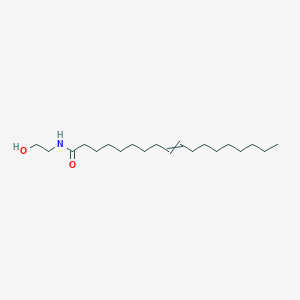
Oleoylethanolamide (OEA) is a naturally occurring lipid mediator derived from oleic acid, a monounsaturated fatty acid. It functions as a high-affinity endogenous agonist for the nuclear receptor peroxisome proliferator-activated receptor alpha (PPAR-α). OEA is synthesized in the small intestine following food consumption through a two-step process involving N-acyltransferase and N-acyl phosphatidylethanolamine-specific phospholipase D (NAPE-PLD). This molecule plays a crucial role in regulating feeding behavior and energy homeostasis by promoting fatty acid uptake, lipolysis, and β-oxidation, while also enhancing food intake control.
Research indicates that OEA may mediate the beneficial effects of high-oleic acid diets on body composition, potentially through its influence on lipid metabolism and energy intake. Studies have shown that OEA can stimulate fatty acid uptake and oxidation, contributing to its role in weight management and obesity treatment. Additionally, OEA exhibits neuroprotective properties, reducing neuronal death in models of neurodegeneration by stabilizing microtubule dynamics and modulating neuroinflammation.
OEA’s ability to bind to the novel cannabinoid receptor GPR119 further underscores its potential as a therapeutic agent. It has been suggested that OEA acts as the endogenous ligand for GPR119, influencing various physiological processes. Moreover, OEA has been implicated in the inhibition of food-seeking behavior and the regulation of metabolic changes during hibernation in animals like brown bears.
The above information is displayed for information purpose only, and has not been reviewed by EON nor does EON attests or validates the accuracy nor does it constitutes a recommendation or validation.
https://en.wikipedia.org/wiki/Oleoylethanolamide
| Other Names | n-oleoylethanolamine, oleoylethanolamide, N-(2-Hydroxyethyl)oleamide |
|---|---|
| IUPAC Name | (Z)-N-(2-hydroxyethyl)octadec-9-enamide |
| CAS | 111-58-0 |
| Molecular Weight | 325.5 |
| Molecular Formula | C20H39NO2 |
| SMILES | CCCCCCCC/C=C\CCCCCCCC(=O)NCCO |
Related products