Traneurocin – (3705-27-9)
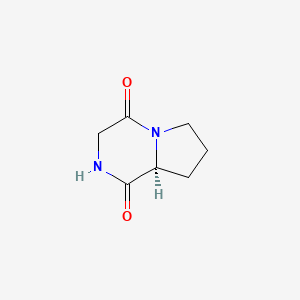
Traneurocin also known as cycloprolylglycine (CPG), is a racetam-like drug under development for the treatment of various neurological disorders, including COVID-19-induced neuropathy, Alzheimer’s disease, fragile X syndrome, Rett syndrome, and major depressive disorder. As of September 2024, traneurocin is in phase 3 clinical trials for COVID-19, phase 2 trials for Alzheimer’s disease, fragile X syndrome, and Rett syndrome, and phase 1 trials for major depressive disorder.
The drug’s mechanism of action is not fully disclosed, but it is known to act as a positive allosteric modulator of the AMPA receptor and has been found to increase brain-derived neurotrophic factor (BDNF) levels. It also acts as a positive allosteric modulator of the GABAA receptor. Traneurocin is described as having neuroprotective, neurogenesis-stimulating, and pro-cognitive or nootropic effects, with additional antihypoxic and anxiolytic properties.
The above information is displayed for information purpose only, and has not been reviewed by EON nor does EON attests or validates the accuracy nor does it constitutes a recommendation or validation.
https://en.wikipedia.org/wiki/Traneurocin
| Other Names | CYCLO(-GLY-PRO), Cyclo(prolylglycyl), Cyclo-Gly-Pro |
|---|---|
| IUPAC Name | (8aS)-2, 3, 6, 7, 8, 8a-hexahydropyrrolo[1, 2-a]pyrazine-1, 4-dione |
| CAS | 3705-27-9 |
| Molecular Weight | 154.17 |
| Molecular Formula | C7H10N2O2 |
| SMILES | C1C[C@H]2C(=O)NCC(=O)N2C1 |
Related products