SAM-e – (29908-03-0)
S-Adenosyl methionine (SAMe), also known as Ademetionine or SAM-e, is a naturally occurring compound found in the body that plays a crucial role in various biological processes. It is involved in methyl group transfers, transsulfuration, and aminopropylation, with the liver being the primary site of its production and consumption. SAMe is synthesized from adenosine triphosphate (ATP) and methionine by the enzyme methionine adenosyltransferase. This compound is essential for over 40 known methyl transfer reactions to substrates such as nucleic acids, proteins, lipids, and secondary metabolites.
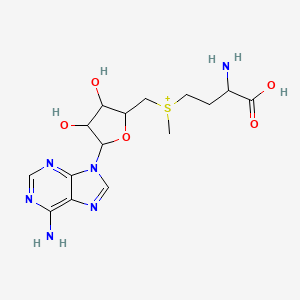
In the body, SAMe serves as a regulator in processes like DNA, tRNA, and rRNA methylation, immune response, amino acid metabolism, and transsulfuration. It is also crucial in plants for the biosynthesis of ethylene, an important plant hormone. The structure of SAMe includes an adenosyl group attached to the sulfur of methionine, giving it a positive charge and making it highly reactive.
SAMe is available as a dietary supplement in countries like the United States, Canada, and the UK, and as a prescription drug in several European countries and Russia. It is used therapeutically for conditions such as depression, osteoarthritis, and liver disease. Research indicates that SAMe may be effective in treating depression and providing pain relief for osteoarthritis, with fewer side effects compared to traditional medications. However, the evidence for its efficacy in liver disease is inconclusive.
The above information is displayed for information purpose only, and has not been reviewed by EON nor does EON attests or validates the accuracy nor does it constitutes a recommendation or validation.
https://en.wikipedia.org/wiki/S-Adenosyl_methionine
| Other Names | S-adenosyl-L-methionine, Ademetionine, S-adenosylmethionine |
|---|---|
| IUPAC Name | (2S)-2-amino-4-[[(2S, 3S, 4R, 5R)-5-(6-aminopurin-9-yl)-3, 4-dihydroxyoxolan-2-yl]methyl-methylsulfonio]butanoate |
| CAS | 29908-03-0 |
| Molecular Weight | 398.4 |
| Molecular Formula | C15H22N6O5S |
| SMILES | C[S+](CC[C@@H](C(=O)[O-])N)C[C@@H]1[C@H]([C@H]([C@@H](O1)N2C=NC3=C(N=CN=C32)N)O)O |
Related products