P7C3 – (301353-96-8)
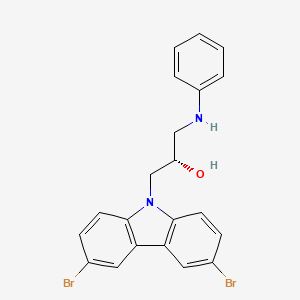
P7C3 is a neuroprotective and proneurogenic drug that shows promise for treating neurodegenerative disorders like Alzheimer’s disease. It is structurally related to latrepirdine (dimebon) but exhibits significantly stronger activity, with its proneurogenic effects being about thirty times more potent. P7C3 was selected for further research due to its favorable pharmacokinetic properties, including high oral bioavailability and a long duration of action. The compound works by activating nicotinamide phosphoribosyltransferase (NAMPT), the enzyme responsible for converting nicotinamide into nicotinamide adenine dinucleotide (NAD), thereby increasing intracellular NAD levels.
P7C3-A20, a derivative of P7C3, is even more potent and has been shown to exert antidepressant-like effects. It can cross the blood-brain barrier, making it a potential candidate for treating brain injuries. In preclinical studies, P7C3-A20 has demonstrated the ability to alleviate oxygen-glucose deprivation-induced cytotoxicity and apoptosis in PC12 cells, and to reduce infarct volume and improve motor function in hypoxic-ischemic injury models without causing neurotoxicity.
Both P7C3 and P7C3-A20 are being investigated for their potential in neuroprotection and neurogenesis. These compounds offer new avenues for developing treatments that could slow down or reverse neuronal damage and improve outcomes for patients suffering from neurodegenerative diseases.
The above information is displayed for information purpose only, and has not been reviewed by EON nor does EON attests or validates the accuracy nor does it constitutes a recommendation or validation.
https://en.wikipedia.org/wiki/P7C3
| IUPAC Name | 1-anilino-3-(3, 6-dibromocarbazol-9-yl)propan-2-ol |
|---|---|
| CAS | 301353-96-8 |
| Molecular Weight | 474.2 |
| Molecular Formula | C21H18Br2N2O |
| SMILES | C1=CC=C(C=C1)NCC(CN2C3=C(C=C(C=C3)Br)C4=C2C=CC(=C4)Br)O |
Related products