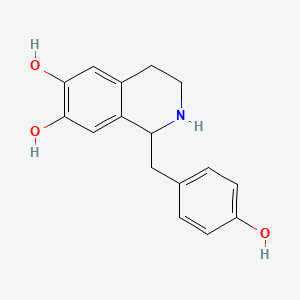
Higenamine HCL – (11041-94-4)
Higenamine, also known as norcoclaurine, is a naturally occurring alkaloid found in various plants, including Aconitum carmichaelii, Nandina domestica, and Nelumbo nucifera. It has been used in traditional Chinese medicine for centuries to treat conditions such as heart failure, asthma, and arthritis.
Higenamine acts as a β2-adrenergic receptor agonist, which contributes to its bronchodilatory, vasodilatory, and cardiotonic effects. It is also known to exhibit anti-inflammatory, antioxidant, and anti-apoptotic properties. In modern applications, higenamine is used in dietary supplements for weight loss and sports performance, though its safety and efficacy remain under investigation. Research continues to explore its therapeutic potential in conditions such as ischemia/reperfusion injury, sepsis, and osteoporosis.
The above information is displayed for information purpose only, and has not been reviewed by EON nor does EON attests or validates the accuracy nor does it constitutes a recommendation or validation.
https://en.wikipedia.org/wiki/Higenamine
| Other Names | Higenamine hydrochloride, Higenamine HCl, Demethyl, 6, 7-dihydroxy-1-(4-hydroxybenzyl)-1, 2, 3, 4-tetrahydroisoquinoline hydrochloride |
|---|---|
| IUPAC Name | 1-[(4-hydroxyphenyl)methyl]-1, 2, 3, 4-tetrahydroisoquinoline-6, 7-diol;hydrochloride |
| CAS | 11041-94-4 |
| Molecular Weight | 307.77 |
| Molecular Formula | C16H18ClNO3 |
| SMILES | C1CNC(C2=CC(=C(C=C21)O)O)CC3=CC=C(C=C3)O.Cl |
Related products